
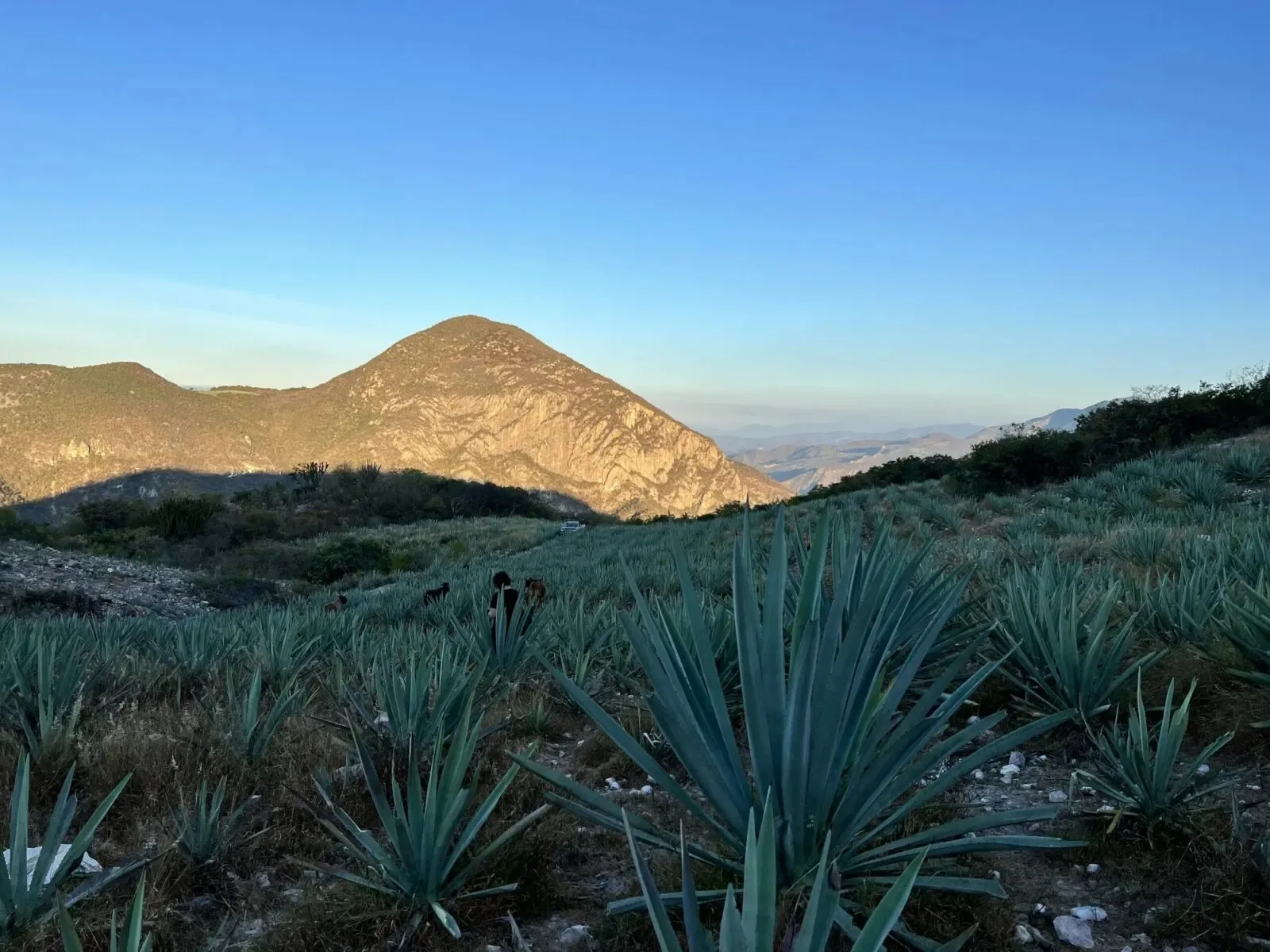
By Read Spear
Mezcal
Master Class
From the agave in the field to the mezcal in your copita, and the people who make it in between.
Explore the master classAgave and its spirits
Maguey is another name for agave. Mesoamerican peoples have used these plants for food, drink, fiber and shelter for thousands of years. The spirits are one branch of that history.
Mezcal
The broader agave-spirit tradition
Mezcal
The protected name for mezcals made with permitted agaves in designated areas of Mexico, including Oaxaca.
Tequila
Blue Weber agave. Jalisco and designated areas in four other states.
Raicilla
Several agave species. Designated areas in Jalisco and Nayarit.
Bacanora
Agave angustifolia. Designated areas of Sonora.
Sotol is distilled from Dasylirion. Mexico’s Sotol denomination covers Chihuahua, Coahuila and Durango. Sotol is also made in Texas.
Mexico’s protected designations · Sotol in Texas
El maguey The agave plant
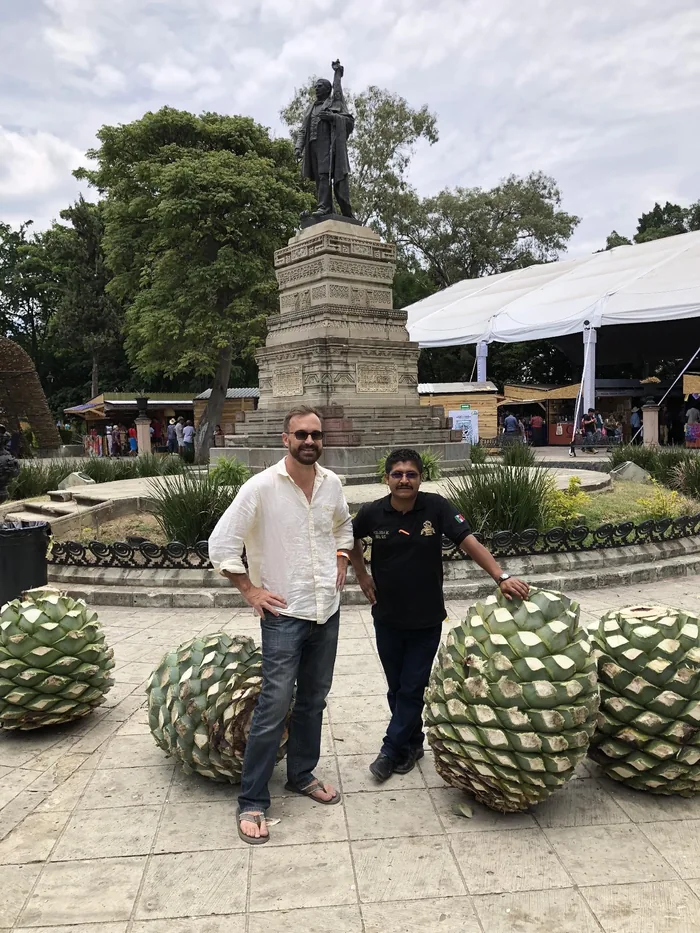
Agaves are succulents in the asparagus family. The quiote is the flower stalk, the penca is the leaf, and the piña is the trimmed heart where the plant stores carbohydrates. Many agaves flower once. Their rosettes die after setting seed, but offsets can live on.
Six agaves to know
Common names vary by region. Maturity ranges are approximate and depend on growing conditions.
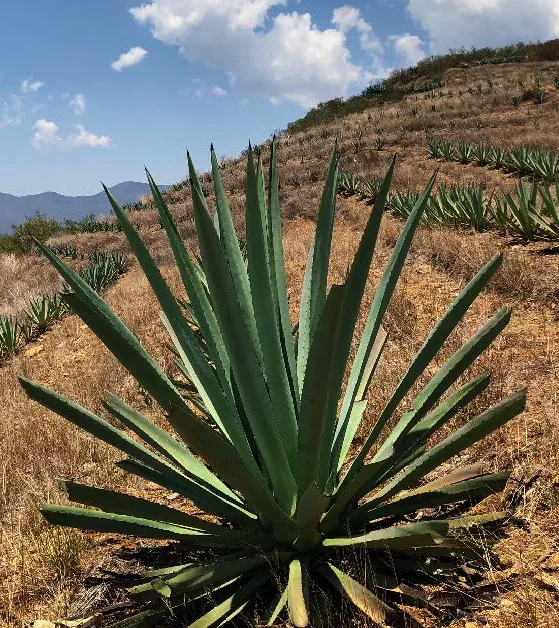
Espadín
Agave angustifolia
Espadín grows a large piña and is widely cultivated in Oaxaca. In Sonora, plants of the same species supply the agave for bacanora.
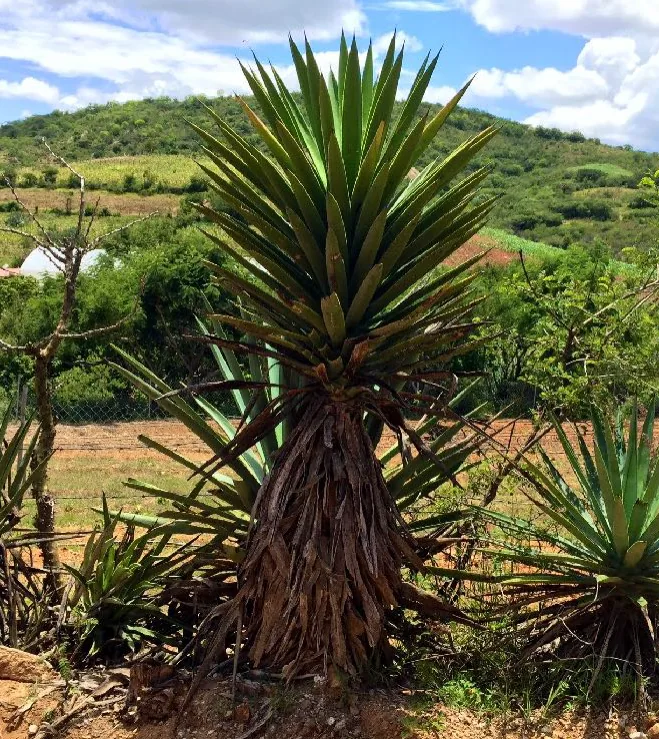
Cuishe / Cuixe
Agave karwinskii
Look for an upright crown and a long stem. Local names include madrecuishe, bicuishe, barril, cirial, tobaziche, tripón and verde. I’ve seen it along fence rows at 5,000–6,000 feet. It’s my favorite agave.
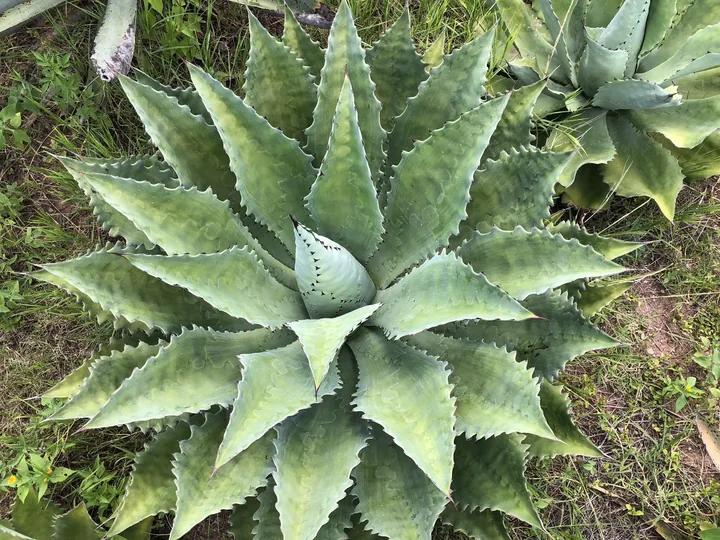
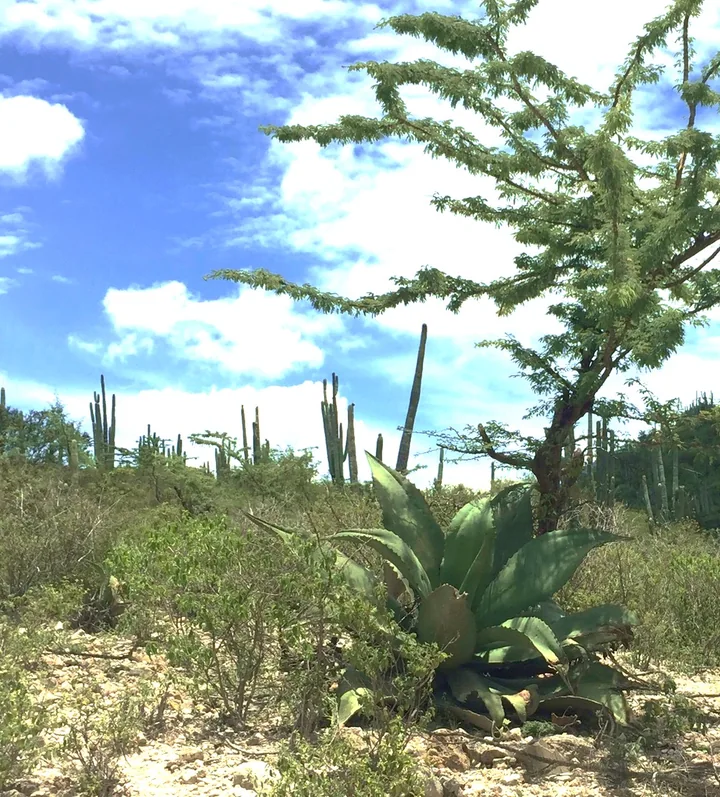
Tobalá / Biliá
Agave potatorum
A compact rosette with a relatively small piña. Tobalá is prized and can divide a tasting room. I find it often appeals to Scotch drinkers.
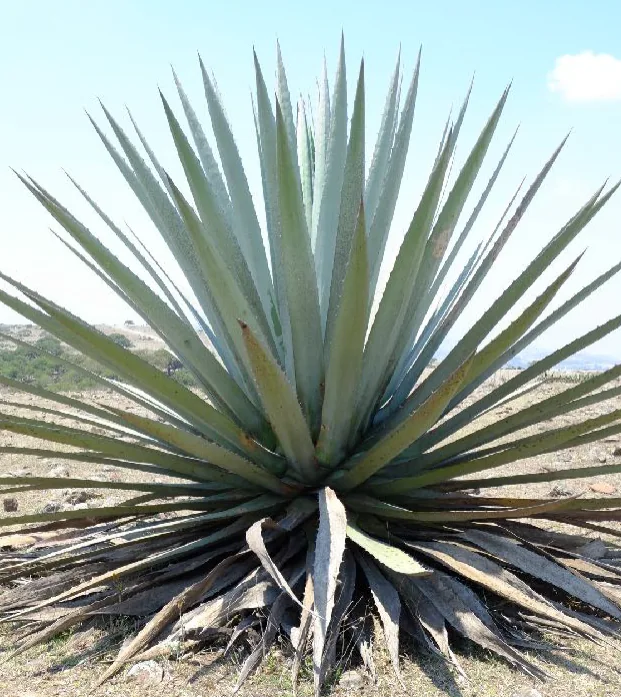
Tepeztate / Pitzometl
Agave marmorata
A slow-growing agave with broad leaves and a large piña. Mature plants can topple. I often find sweetness and a pronounced fruit aroma in tepeztate mezcals.
Arroqueño
Agave americana
A large rosette with very long leaves and a substantial piña. Some expressions remind me of a drier Espadín. Local names for forms of this species include coyote, americano, blanco, castilla, cenizo, del rayo, sierra negra, pulquero and cuish.
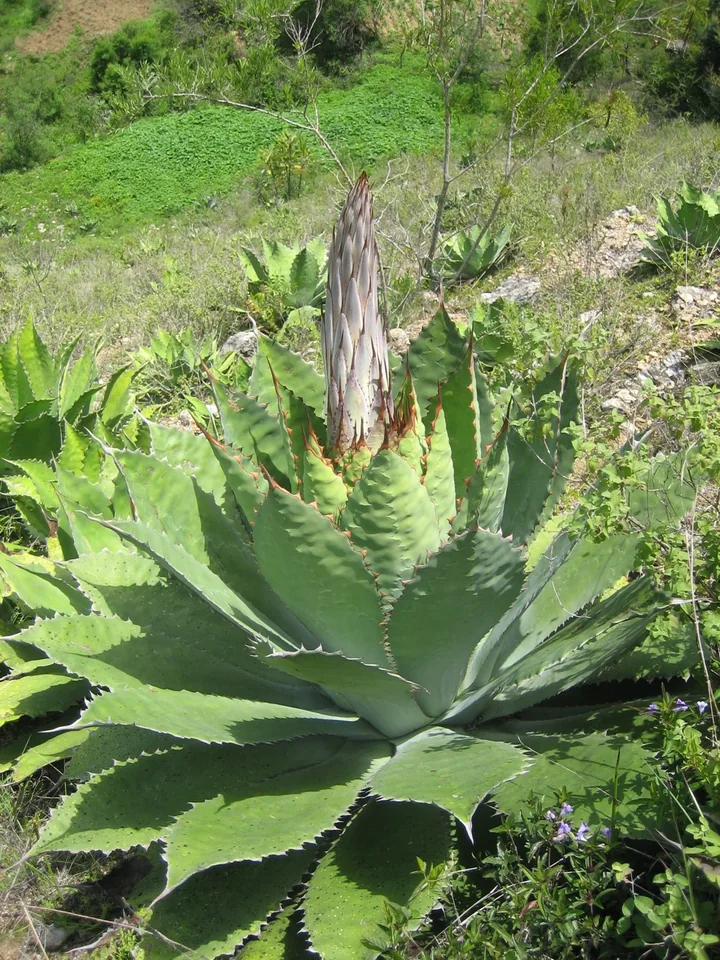
Papalote
Agave cupreata
Papalote is to Guerrero what Espadín is to Oaxaca. It’s a mainstay of the local mezcal tradition. It grows in the Balsas basin, including Guerrero and Michoacán, and has broad leaves with pronounced copper-colored teeth.
Photo by Meredith Martin · CC BY 3.0 · resized and cropped

Several more species, including A. salmiana, A. durangensis and A. rhodacantha, are used for mezcal. In the Jalisco sierra, raicilla can use A. maximiliana and A. inaequidens.
Making mezcal
Del campo al palenque. From the field to the place where mezcal is made.
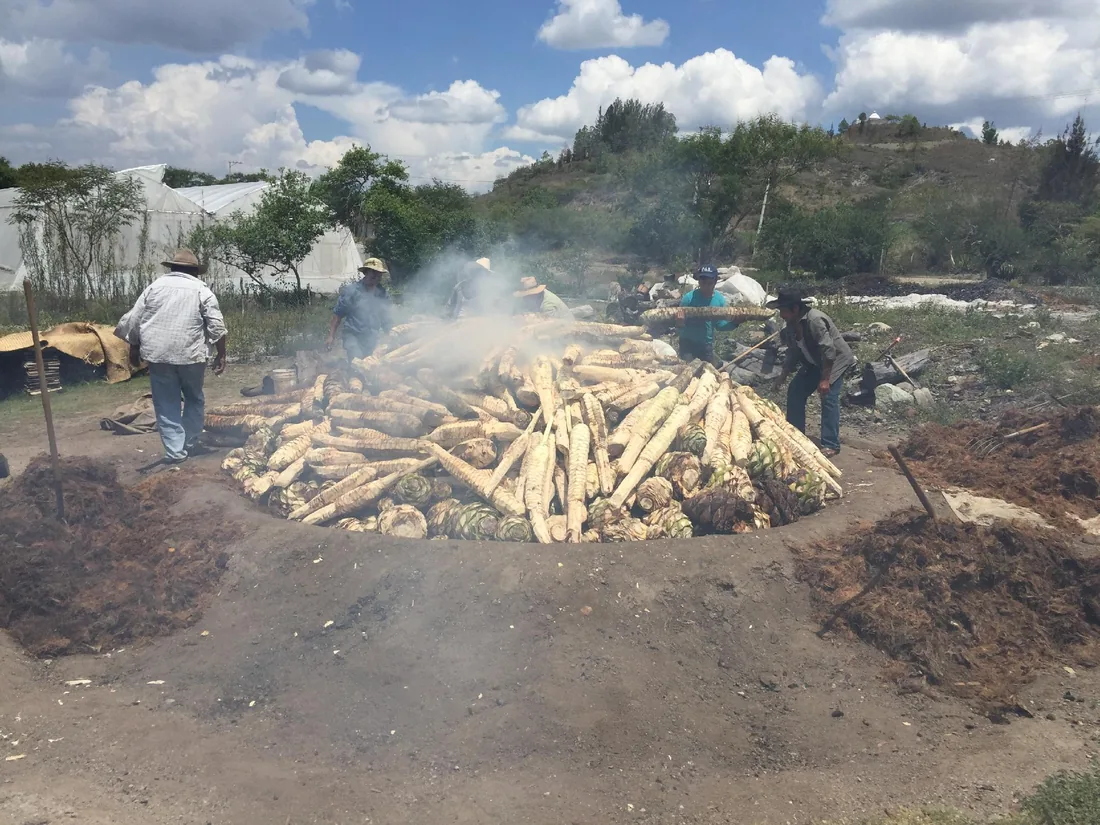
Grow and harvest Sembrar y cosechar
Growers plant from seed or propagate offsets. Many let some mature plants flower and set seed. Their flowers feed bats and moths, and planting from seed helps retain genetic diversity. At harvest, the crew cuts away the leaves and hauls the hearts to the palenque.
Cook and mill Cocer y moler
Cooking breaks agave fructans into fermentable sugars. A tahona, or stone wheel, crushes cooked agave. Some producers pound it by hand in a canoa y mazo, a wooden trough and mallet. Milling exposes more surface for yeasts to reach the solid sugars.
Ferment Fermentar
Crushed agave goes into a tina, or vat, with water. Yeasts turn the sugars into alcohol. Some producers leave the fibrous material, the bagazo, in the mash.
Some palenques stretch cowhides over wooden frames to make vats. The choice of vessel is separate from the choice to include bagazo.
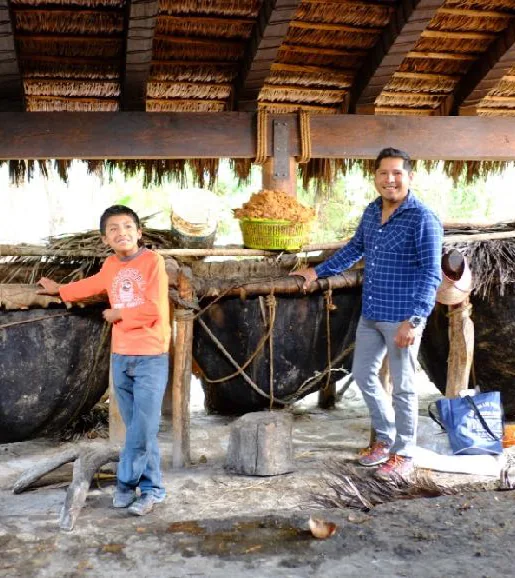
Cuero de res. Cowhide fermentation vats. Distill Destilar
Heat sends alcohol and other volatile compounds into the vapor. Cooling condenses that vapor back into liquid. In a two-run process, the first distillate is the ordinario. The maker decides how to cut the run into puntas (heads), cuerpo (hearts) and colas (tails).
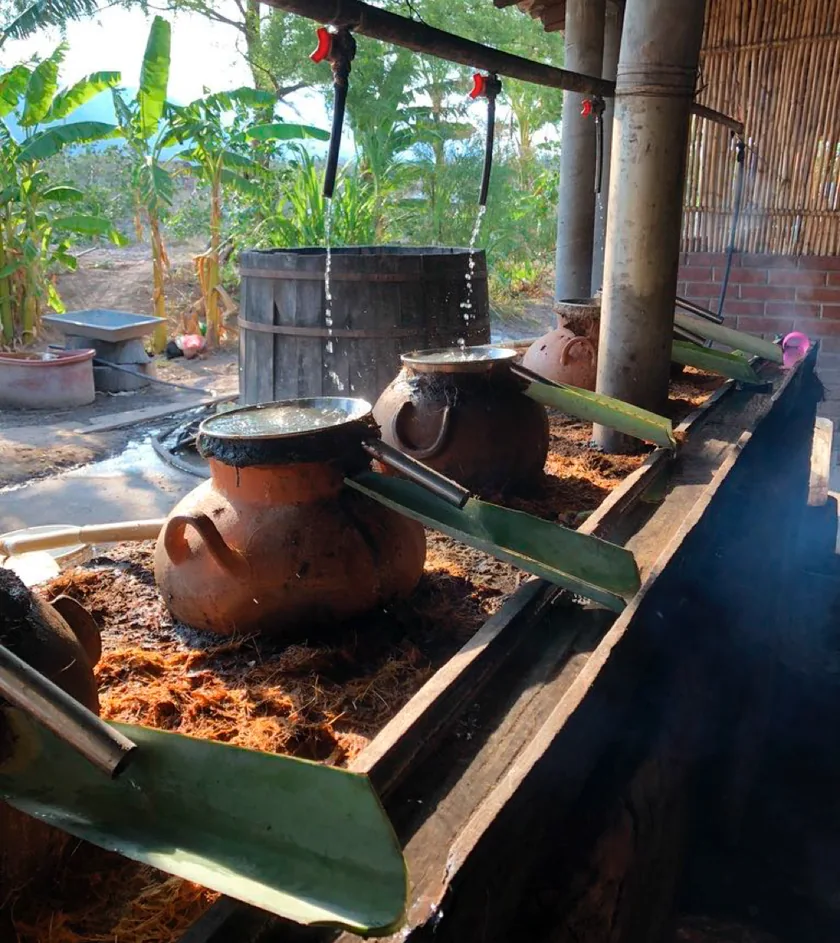
Ollas de barro. Clay-pot stills. 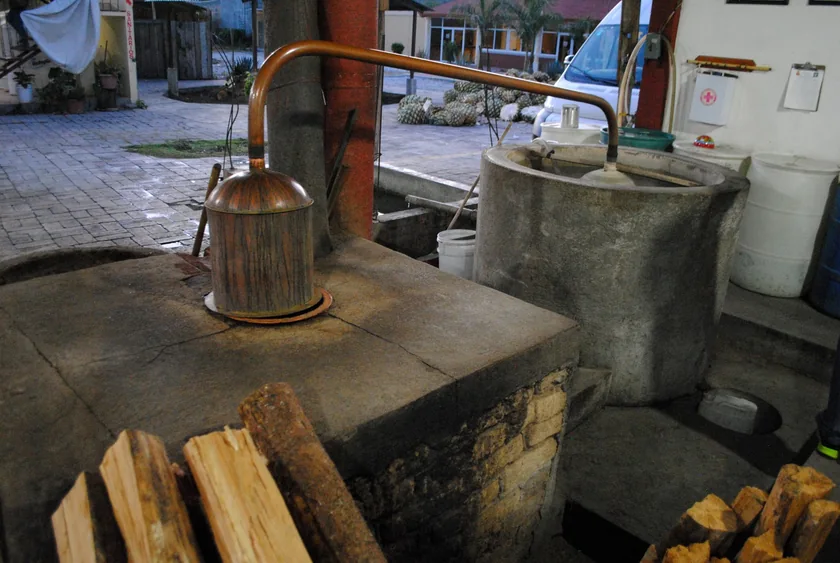
Alambique de cobre. Copper still, Teotitlán del Valle. ProtoplasmaKid · CC BY-SA 4.0 · resized and cropped. Bottle Envasar
The lot number identifies a particular batch. Bring it along when you compare notes on two bottles of the same expression.

Read the illustrated production guide
How to read the category and class
The category tells you which production rules apply. The class tells you how the spirit was finished or flavored. NOM-070-SCFI-2016 defines three categories and six classes.
Mezcal
- Cooking / Cocción
- Pit oven, masonry oven or autoclave.
- Milling / Molienda
- Includes stone mills, mill trains and diffusers.
- Fermentation / Fermentación
- Wood, masonry or stainless steel.
- Distillation / Destilación
- Pot stills, continuous stills or columns.
Mezcal Artesanal
- Cooking / Cocción
- Pit oven or raised masonry oven.
- Milling / Molienda
- Mallet, stone or roller mill, or shredder.
- Fermentation / Fermentación
- Wood, clay, masonry, hides or cavities. Agave fiber is optional.
- Distillation / Destilación
- Direct fire. Copper boiler or clay pot. Several head materials are permitted.
Mezcal Ancestral
- Cooking / Cocción
- Pit oven.
- Milling / Molienda
- Mallet or stone mill.
- Fermentation / Fermentación
- Wood, clay, masonry, hides or cavities. Agave fiber is optional.
- Distillation / Destilación
- Direct fire. Clay pot with clay or wooden head.
- Blanco or Joven
- Bottled with no further processing.
- Madurado en Vidrio
- Matured in glass for more than 12 months.
- Reposado
- Rested in wood for 2 to 12 months.
- Añejo
- Aged in wooden vessels smaller than 1,000 liters for more than 12 months.
- Abocado con
- Flavored by adding ingredients. A gusano, the larva of an agave moth, is one example.
- Destilado con
- Distilled with ingredients. Pechuga often uses poultry breast and can include fruit or spices.
Mezcal and tequila
From the earliest written records of vino mezcal to the tequila industry that grew around a town in Jalisco.
Early records
- Before contact
- Mesoamerican peoples roasted agave for food and fermented maguey sap into pulque. The Nahuatl mexcalli means cooked agave.
- 1520
- Hernán Cortés describes maguey wine sold in Tenochtitlan. His account concerns a fermented drink.
- Late 1500s
- Filipino distillers make coconut spirits in Colima. Their stills offer one explanation for the spread of agave distillation in western Mexico. The origins of agave distillation are still debated.
- 1616 and 1621
- A 1616 church tithe record from the Province of Ávalos names vino mezcal. Domingo Lázaro de Arregui’s 1621 description of Nueva Galicia records Indigenous people distilling roasted agave.
Vino mezcal becomes tequila
- 1600s
- Vino mezcal reaches Guadalajara and mining towns. Colonial authorities use taxes and prohibitions to control the trade.
- 1758 and 1795
- José Antonio de Cuervo receives a land grant in 1758. After a decade-long prohibition, Carlos IV grants José María Guadalupe de Cuervo y Montaño a license to make and sell vino mezcal in 1795.
- 1810s–1820s
- Agave planting and distilling expand during and after the war for independence. Merchants sell through Guadalajara and the port of San Blas.
- 1860s–1880s
- Larger distilleries adopt masonry ovens, steam-powered mills and imported stills. Félix López founds Herradura in 1870. Cenobio Sauza buys La Antigua Cruz in 1873. Rail links Guadalajara and Mexico City in 1888. By the end of the century, producers around Tequila increasingly sell the spirit under the town’s name.
Revolution, land and tequila
- 1876–1911
- During the Porfiriato, major houses accumulate land and bring agave farming and distilling under the same ownership.
- 1910–1913
- Francisco Madero challenges Porfirio Díaz. After revolutionary forces take Ciudad Juárez in 1911, Díaz resigns and Madero wins the presidency. Madero and Vice President José María Pino Suárez are killed after the 1913 coup.
- 1914–1919
- Carranza, Villa, Obregón and Zapata help defeat Huerta. The coalition splits. The 1917 Constitution provides a basis for land redistribution. Zapata is killed in 1919.
- 1920s–1930s
- The Cristero War adds instability in Jalisco. Redistribution, especially under Lázaro Cárdenas, breaks up haciendas and expands communal landholdings. Distilleries increasingly buy agave from independent growers.
- 1900–1940
- One historical series puts annual tequila output at about 8.7 million liters in 1900 and 1.65 million in 1940.
A protected name and an industrial market
- 1949
- The first federal tequila standard requires all fermentable sugars to come from agave.
- 1964 and 1970
- Revisions allow up to 30% sugars from other sources in 1964 and 49% in 1970. The current standard reserves Tequila 100% de agave for spirits whose fermentable sugars all come from blue Weber agave.
- 1974–1994
- Tequila becomes Mexico’s first denomination of origin in 1974. Herradura introduces its reposado the same year. The territory is expanded in 1977. The Tequila Regulatory Council (CRT) is founded in 1994, the same year Mexico declares the separate Mezcal denomination.
- Around 2000
- Following agave shortages, high-volume producers adopt diffusers to extract more from each plant.
- 2006–2025
- UNESCO lists Jalisco’s agave landscape and historic tequila facilities in 2006. In 2024, the CRT counted 206 authorized producers and 2,991 linked brands. Production reached about 583 million liters in 2025.
Early mezcal records · Tequila industry and land reform · Mexican Revolution chronology · Tequila standard · UNESCO listing · CRT producer and brand counts · 2025 production
Who makes it and who sells it?
In 2018, ten companies accounted for 76.4% of global tequila sales by volume. Becle, whose brands include José Cuervo, accounted for 29.8%. Beam Suntory’s tequila business, including Sauza and Hornitos, accounted for 12.4%. One distillery can make tequila for many brands, so counts of producers, counts of brands and shares of sales each tell you something different.
Industry concentration, Table 2
What a diffuser does
Hot water extracts carbohydrates from shredded agave. In some systems, heat and hydrolysis happen alongside extraction, effectively combining cooking and extraction. NOM-070 lists diffusers under the general Mezcal category.
How can you tell if the producer used a diffuser?
It says “tequila” on the bottle.
How the label debate played out
In 2012, the draft NOM-186 proposed aguardiente de agave and destilado de agave. A later NOM-199 draft proposed “Komil” for agave spirits outside the protected denominations. Regulators dropped that name after public comment. The published NOM-199 defines aguardiente and allows agave as a source. The separate NOM-070 governs the categories and classes of Mezcal.
Sustainability
Mezcal’s footprint begins in the field. At the palenque, it extends to the fuel and water brought in and what’s left in the still after the run.
Cultivated and wild agaves
Espadín often takes seven to ten years to mature. A rush to plant when prices are high can turn into a glut by harvest. In San Juan del Río, Oaxaca, one study estimated that agave cultivation grew from about 6% to 22% of local land cover between 1993 and 2019. Part of that expansion replaced dry forest. Retaining native cover on slopes helps protect soil, and growing some plants from seed helps keep genetic diversity in the crop.
Harvesting wild plants before they bloom reduces the supply of seed and nectar. Rules on who can harvest, how much they can take, and which plants must be left to flower can help keep a population viable. Replanting helps when the young plants survive. The Cruz family grows tobalá and other agaves also harvested in the wild.
San Juan del Río land-use study · Agave agroforestry in Oaxaca
Agave on water-stressed land
Agaves use CAM photosynthesis. They take up much of their CO₂ at night, when they lose less water. On degraded, dry soils, low-input agave plantings can build living cover where water is scarce and competed for. What matters for carbon held in living agaves is the total biomass on the land. Stagger planting and harvest, and several age groups can keep growing even as mature plants come out. The net gain also depends on the cover already there, soil carbon, and how the land and harvested material are managed.
These are estimates from different sites and methods. They illustrate the trade-offs. The corn example takes up more CO₂ per hectare than blue agave and uses more water per kilogram of biomass and more fertilizer nitrogen per hectare. Corn uses C4 photosynthesis and has high nitrogen demand.
Annual net CO₂ uptake
t CO₂ per hectare per year
- Blue agave
- 12.2
- Corn
- 18.8
- Soybean
- 9.4
Net exchange with the atmosphere at the field scale, including ecosystem respiration. The blue agave estimate comes from a fourth-year Jalisco planting. Corn and soybean come from the Central Mississippi River Basin.
Water transpired
L per kg of dry aboveground biomass
- Blue agave
- 46
- Corn
- 213
- Soybean
- 405
Water that passes through the plant. Total field water and irrigation requirements also depend on soil evaporation, rainfall and management. The estimates come from a rainfed blue agave model for Jalisco and rainfed corn and soybean fields in Nebraska.
Fertilizer nitrogen
kg N per hectare per year
- Blue agave
- 50
- Corn
- 160
- Soybean
- 7
A five-year recommendation averaged in rainfed blue agave in Tamaulipas, and estimated annual fertilizer applied from U.S. grower surveys for corn (2021) and soybean (2023). Soybean can fix atmospheric nitrogen with the help of bacteria.
In a separate Arizona field trial, Agave americana yielded 2–4 tonnes of dry biomass per hectare per year with 300 mm of combined annual rainfall and irrigation.
Agave trial on dry ground · IPCC on cropland carbon stocks
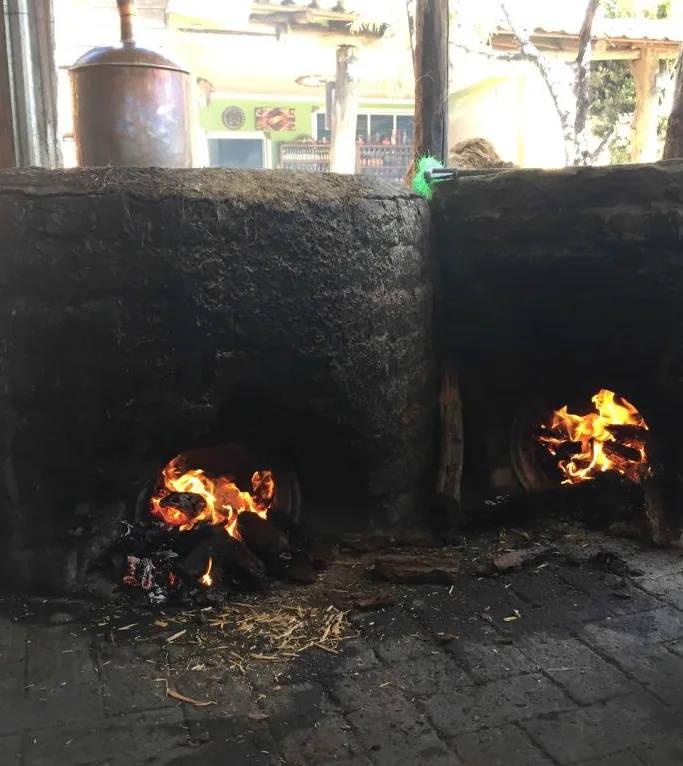
Firewood and the commons Leña
Wood heats the pit oven and often fires the still. Oak, pine and mesquite are among the fuels used. Sawmill offcuts can supply fuel. With a documented supplier, a palenque can trace its wood to a managed forest.
Oaxaca’s Sierra Norte is an international model for community forestry. The classic tragedy of the commons occurs when each cutter has an incentive to take wood now and everyone shares the cost of a depleted forest. Shared rights give the people who depend on future harvests the authority to set limits and enforce them.
In Ixtlán de Juárez, the communal assembly governs about 19,300 hectares. Its forestry plan sets harvest and conservation areas. A council monitors compliance, and residents decide how to reinvest revenue from the community-owned sawmill and forestry enterprise.
Elinor Ostrom on governing the commons · Ixtlán de Juárez case study
Water at the palenque Agua
Water goes into the mash and is used to clean equipment and cool the condenser. Ángel Cruz Robles draws from a spring in the Sierra Sur. The strain on any source depends on the available water and who else draws from it. A recirculating cooling loop can lower fresh withdrawals and keeps the coolant separate from the still’s discharge.
Spent fiber Bagazo
Wet piles of bagazo can send organic runoff into soil and water. Managed composting returns organic matter to the soil. Builders in Oaxaca mix bagazo into adobe, and researchers have also tested molded earth blocks reinforced with mezcal residues. The fiber becomes a second product.
Bagazo compost research · Construction block research
What’s left in the still Vinazas
Both mezcal and tequila leave vinazas, an acidic liquid rich in organic matter. Discharge into waterways can deplete the oxygen aquatic life needs. Storage and treatment capacity must keep up with production. Anaerobic treatment is one option for reducing the organic load.
“Cheap booze is a false economy.”
Christopher Hitchens
Mezcal in Oaxaca
Mezcal keeps people working, gives families a craft to pass on, and marks occasions from a welcome at the table to an offering for the dead.
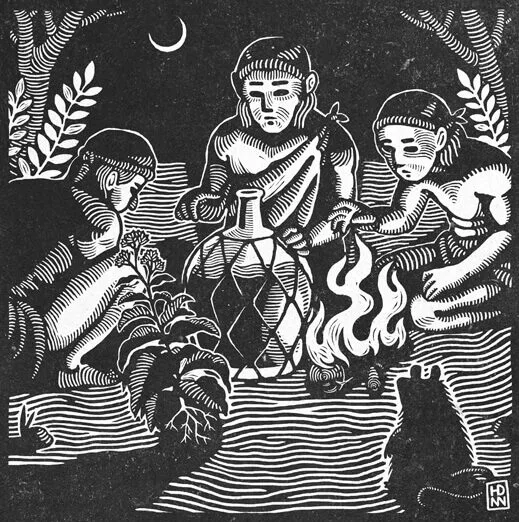
El tlacuache How the opossum stole mezcal from the demons
This is the story we tell across six Cuentacuentos labels.
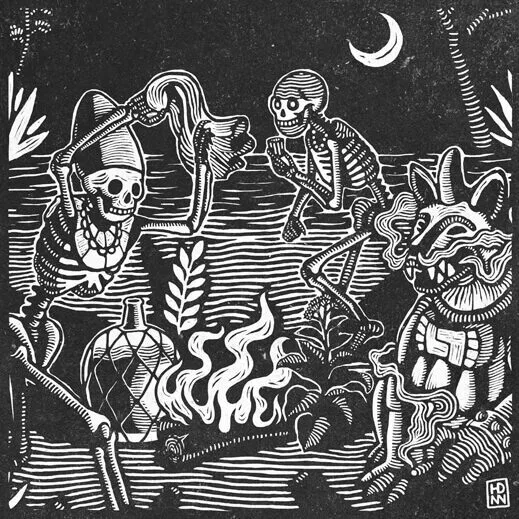
La fiesta
The demons hold their nightly parties around the fire. Humans live in darkness and can only look on while the demons drink mezcal, smoke tobacco and warm themselves.

El voluntario
The humans turn to the animals. The jaguar, the eagle, the rabbit and the burro won’t take on the demons. The overlooked opossum offers to go. The demons, he figures, will underestimate him too.
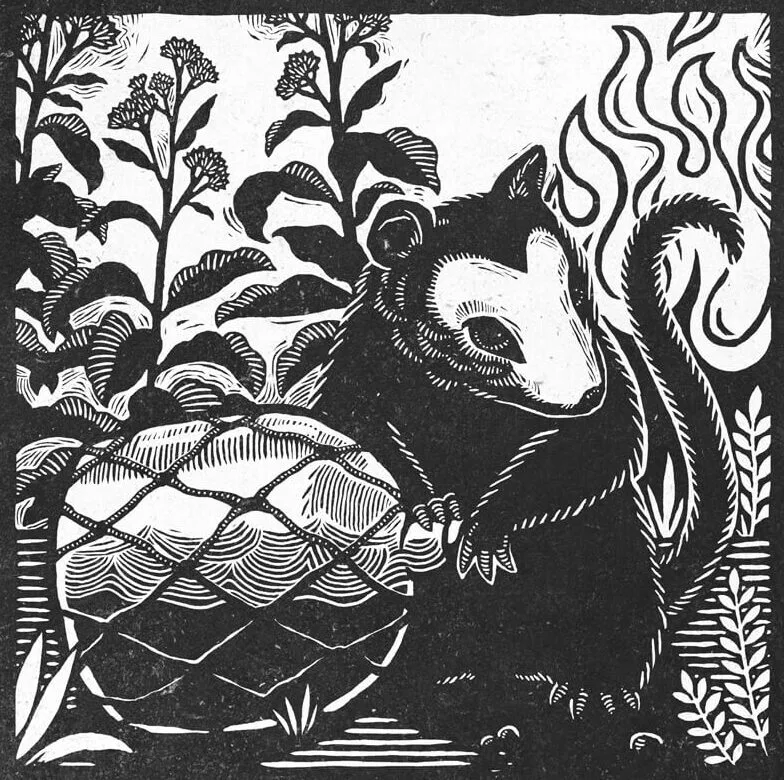
La invitación
The opossum stays close to the fire circle until the demons finally invite him in. “Come here, little old man. Have a smoke and drink with us.” They keep pouring. He hides mezcal and tobacco in his pouch.
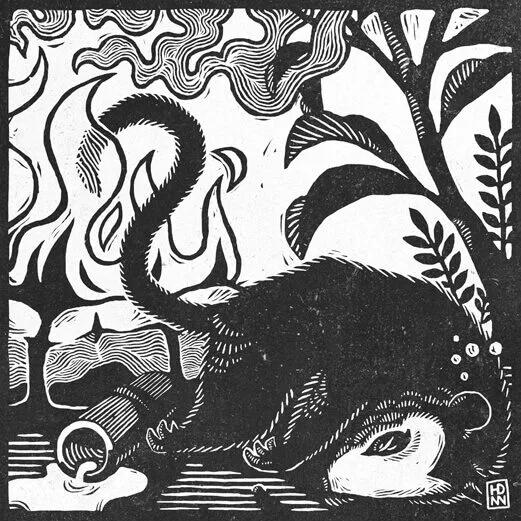
El engaño
Once he has enough, he stumbles like a drunk and falls close to the fire. He puts his tail in the flames. The demons laugh and tell him it’s time to go home.
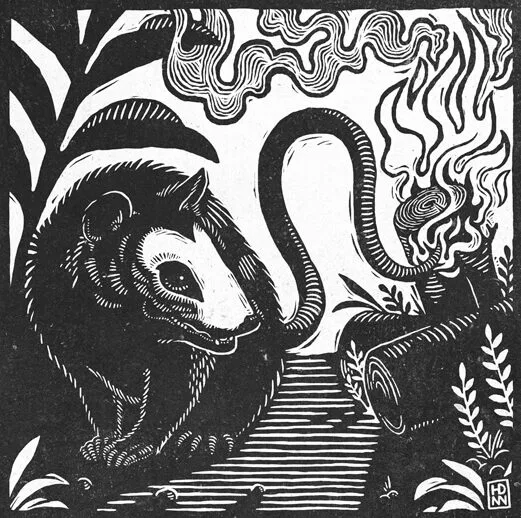
La fuga
He runs back to the waiting humans with his pouch full. With his burning tail he lights their pile of firewood, then shares the mezcal and tobacco.
La celebración
Now the humans can hold a fiesta of their own and tell stories by the fire. The opossum lost the fur on his tail and ears. He still comes by to see how we’re doing.
The demons underestimate the opossum, and he knows it. That’s what makes his generosity possible. Read the full tale and my interpretation.
Los maestros The mezcal makers
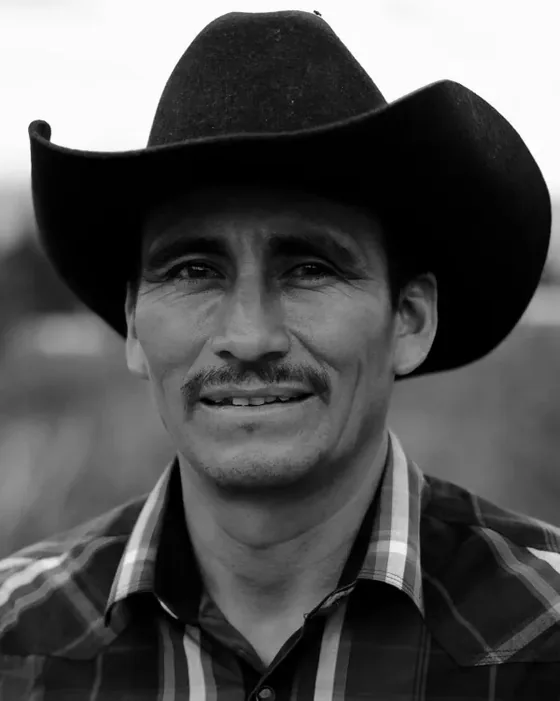
Laurentino Santos Martínez
Working in copper in the Mihuatlán area, Laurentino makes Mexicano from Agave rhodacantha.
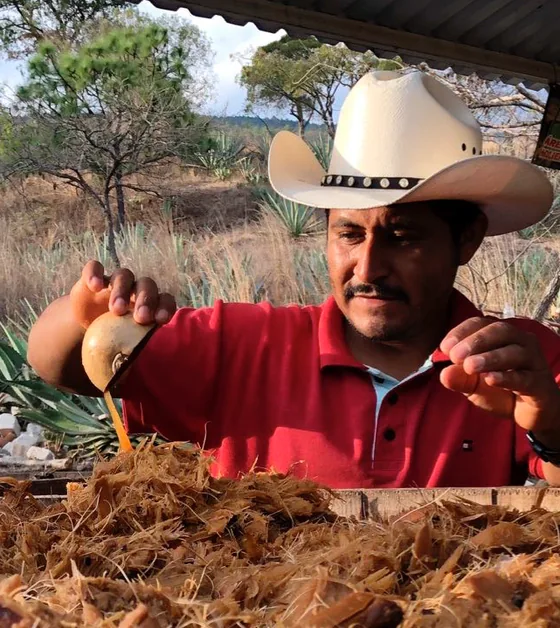
The Cruz family
At least five generations of mezcaleros, four of them living. Ángel Cruz Calvo is the grandfather of Ángel Cruz Robles, pictured. Miguel Cruz del Ríos is Calvo’s son and Robles’s father.
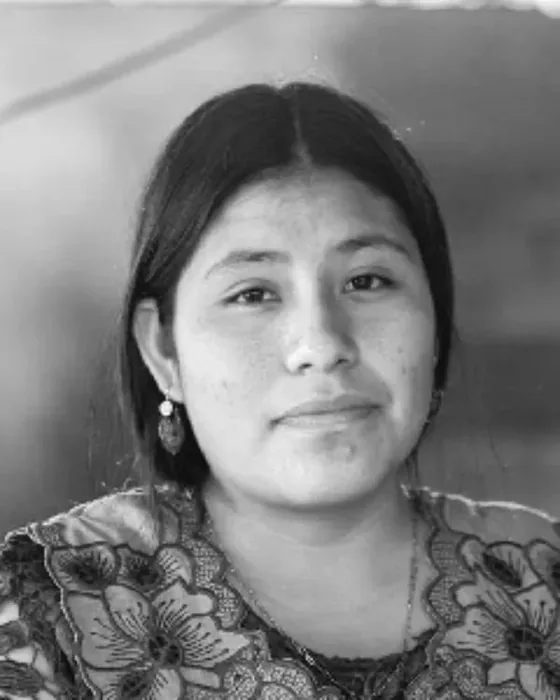
Cristina García García
Cristina is a third-generation mezcalera. The youngest daughter of Maximiliano “Serafín” García Gerónimo, she made her first mezcal at 19, using tepeztate.
In San Dionisio Ocotepec, Serafín and his son Manuel work together at the family palenque. In Santiago Matatlán, Carlos Méndez Blas runs the family distilleries with his mother and siblings.
What mezcal makes possible
Oaxaca accounted for 90.7% of Mexico’s recorded mezcal production in 2024. From planting and cutting agave to distilling and bottling, the industry pays for work in the places that make it. Ángel bought this truck on his birthday with income from selling mezcal to Cuentacuentos. It also put a wedding within reach.

Oaxaca’s 2024 production share
Día de Muertos Day of the Dead
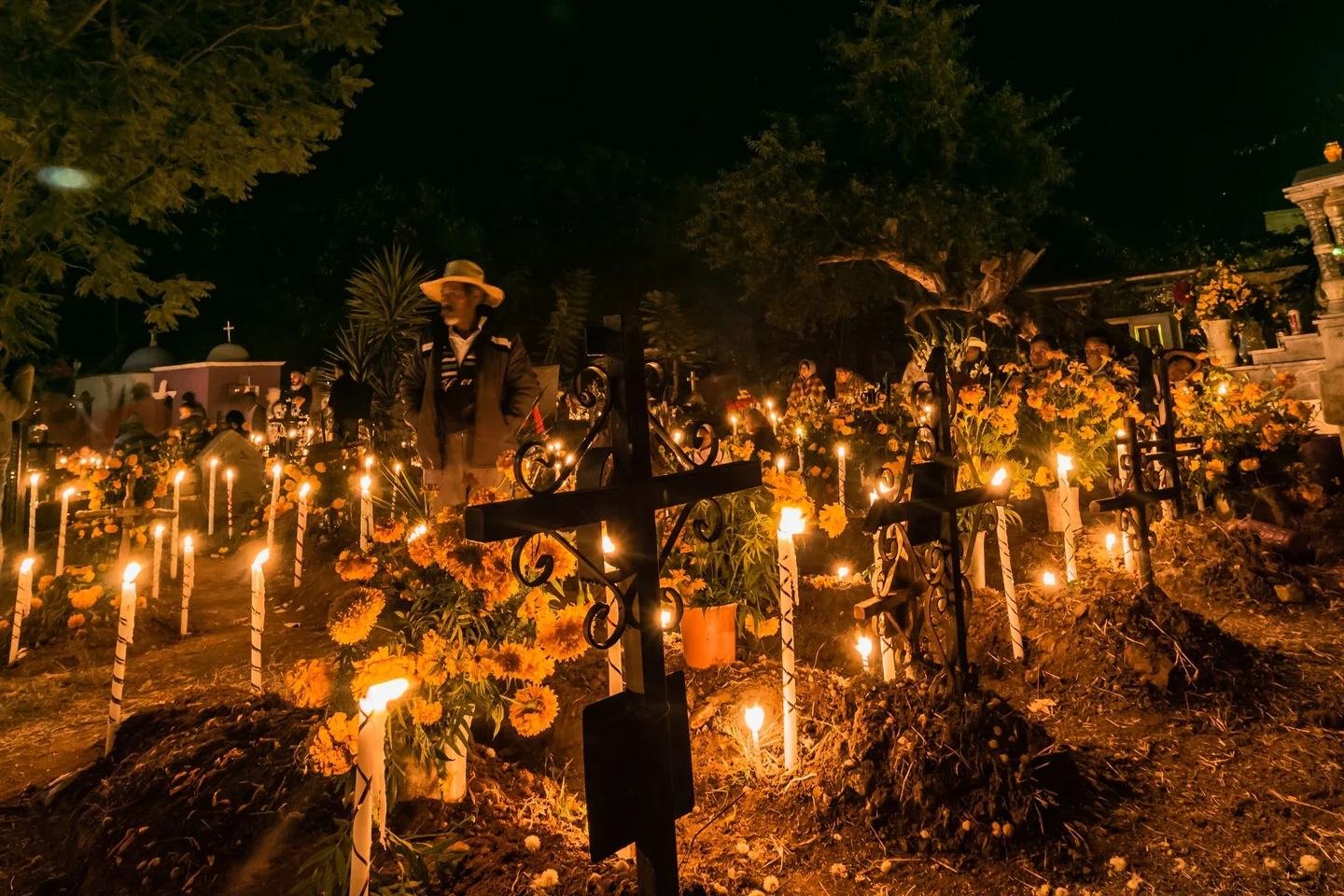
In Oaxacan communities, mezcal is shared at weddings, baptisms and patron-saint fiestas. It also has a place at funerals and in offerings to the dead. Families may set a bottle on the ofrenda with foods the deceased enjoyed. In Atzompa, families light candles and keep vigil at the graves. In some Mixtec communities, families pour a little mezcal onto the grave as an offering before sharing food and drink.
Tasting and presentation
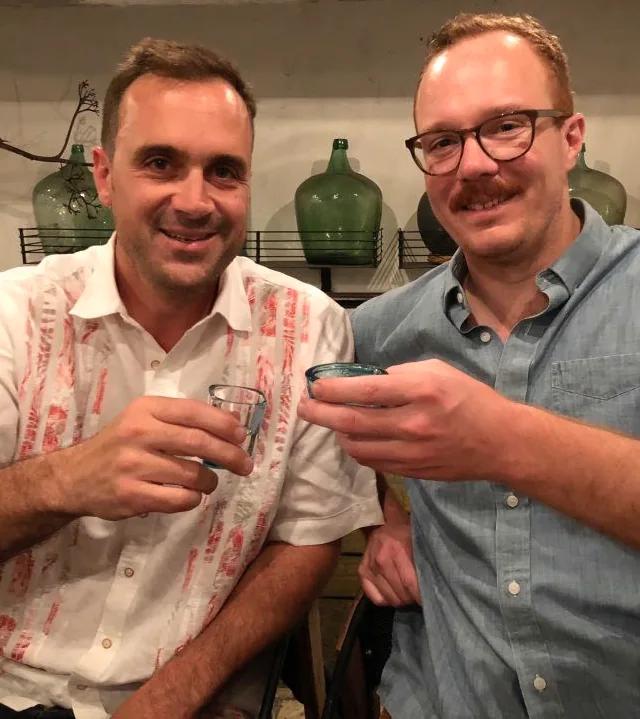
En la mesa At the table
Try a small pour neat with water alongside. A copita is a small cup, and a jícara is a gourd cup.
- Read the label. Note the agave, maker, strength and lot.
- Smell with the glass a little below your nose. Sip slowly and notice what lingers.
- Change one thing at a time. Compare the same agave from two palenques or two agaves from the same maker.
Para todo mal, mezcal
Para todo mal, mezcal.
Para todo bien, también.
Y si no hay remedio, litro y medio.
Si el mal es del corazón, con más razón.
Pero si el mal está cabrón, un galón.
Y si el mal es renuente, ¡hay que empezar nuevamente!
For all that ails you, mezcal.
For all that’s good, mezcal too.
And if there’s no cure, a liter and a half.
If it’s your heart that aches, all the more reason.
But if it’s a real bastard, a gallon.
And if the trouble won’t quit, you start all over again!
¡Salud! / Cheers!